Introduction
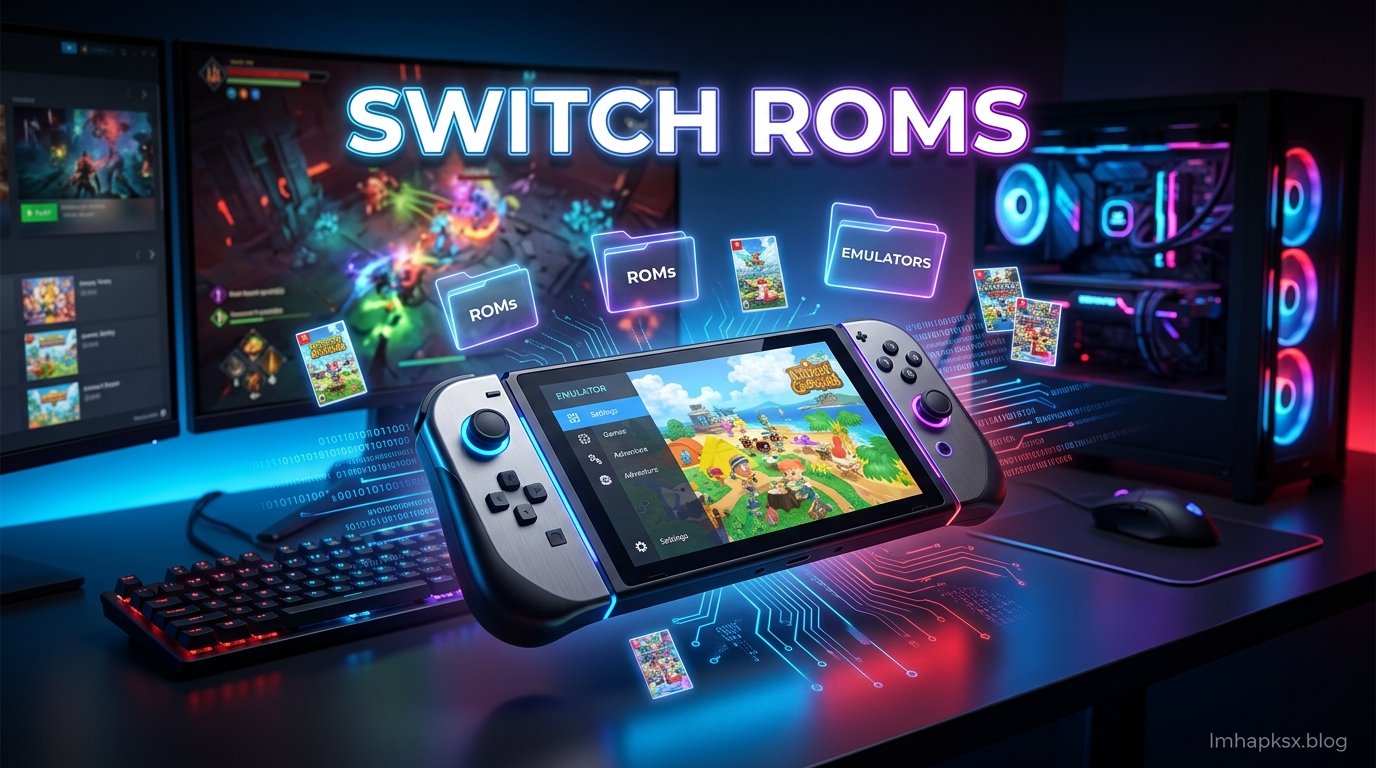
Nintendo Switch ROMs have become one of the most talked-about subjects in modern gaming communities. Since the release of the Nintendo Switch in 2017, millions of players around the world have explored different ways to enjoy games beyond the original hardware. As the popularity of emulation, digital preservation, and homebrew software increased, Switch ROMs quickly became a major part of online gaming discussions. Gamers who want flexible gameplay, enhanced graphics, custom modifications, or game backups often look into Nintendo Switch ROM files and emulators.
A Switch ROM is basically a digital copy of a Nintendo switch roms game. These files are usually extracted from physical game cartridges or digital eShop purchases and can be used on modded Nintendo Switch consoles or emulators running on computers and handheld devices. Over the years, Switch ROMs have gained attention not only from casual gamers but also from developers, preservation enthusiasts, and technology researchers who are interested in console architecture and software compatibility.
At the same time, Switch ROMs remain controversial because they are closely connected to copyright concerns and piracy debates. Nintendo is known for aggressively protecting its intellectual property, which has led to legal action against many ROM-sharing websites and piracy-related projects. Because of this, understanding the technical, legal, and ethical side of Switch ROMs is important before exploring the topic in depth.
What Are Switch ROMs?
The term “ROM” originally referred to “Read-Only Memory,” but in gaming it generally means a digital copy of a video game. In the Nintendo Switch ecosystem, ROMs are files containing complete game data, including textures, audio, scripts, executable code, and system resources. These files allow games to be played without directly using the original physical cartridge.
Nintendo Switch ROMs are usually stored in formats such as NSP and XCI. NSP files are similar to digital installation packages downloaded from the Nintendo eShop, while XCI files are cartridge dumps that replicate the exact structure of physical game cards. Compressed formats like NSZ and XCZ are also common because they reduce storage size while preserving game content.
Switch ROMs are mainly used in two environments. The first is emulation, where games are played on devices like gaming PCs, laptops, Steam Deck systems, or Android handhelds. The second is custom firmware environments on modded Nintendo Switch consoles, where users install unofficial software and backup copies of their games. These uses have made ROMs an important part of the broader gaming preservation and customization community.
History of Nintendo Switch Emulation
Nintendo switch roms emulation started surprisingly early in the console’s lifespan. Unlike older consoles that took many years to emulate properly, the Switch attracted emulator developers soon after launch because its hardware architecture was based on NVIDIA Tegra mobile technology. Since the Switch used ARM architecture similar to Android devices, researchers and developers found it easier to study compared to some previous Nintendo systems.
Early hacking communities focused on discovering vulnerabilities inside the console’s firmware. One of the most significant breakthroughs involved the NVIDIA Tegra recovery mode exploit, which allowed developers to access low-level system functions on unpatched consoles. This discovery opened the door for custom firmware, homebrew applications, and eventually full game emulation.
As emulator development improved, projects like Yuzu and Ryujinx became extremely popular. These emulators introduced advanced rendering systems, better shader compilation, and broader game compatibility. Within a few years, many major Nintendo switch roms titles became playable on PCs with improved frame rates and enhanced graphics. The rapid growth of switch roms emulation showed how quickly modern emulator technology was evolving.
Popular Nintendo Switch Emulators
Yuzu was one of the first major Nintendo switch roms emulators to gain worldwide attention. Developed by the creators of the Nintendo 3DS emulator Citra, Yuzu focused heavily on performance optimization and graphical improvements. It allowed players to increase resolution scaling, unlock frame rates, and apply graphical mods that were impossible on original Switch hardware.
Ryujinx became another highly respected emulator because of its stability and accuracy. While some users preferred Yuzu for performance, Ryujinx was often praised for compatibility and consistent gameplay across many titles. Emulator communities frequently compared the strengths of both projects depending on the game being played.
Modern Nintendo switch roms emulators require powerful hardware to function properly. Since the emulator must recreate the Switch’s CPU, GPU, and operating system behavior, strong processors and graphics cards are important for smooth gameplay. Features such as Vulkan rendering, asynchronous shader compilation, and multi-core CPU support have dramatically improved emulator performance in recent years.
How Switch ROMs Work
Switch ROMs work by providing emulators or modded consoles with the game data needed to run software outside its original cartridge environment. When a ROM file is loaded into an emulator, the emulator interprets and translates the Nintendo Switch system instructions into commands understood by the host computer’s operating system and hardware.
Most Nintendo Switch games use encryption and security systems to prevent unauthorized copying. Because of this, emulators require specific encryption keys and firmware files extracted from a real Nintendo Switch console. Without these files, games cannot properly decrypt their data or boot successfully. This technical requirement is one reason why Switch emulation is more complex than older console emulation.
Game installation processes vary depending on file format and platform. NSP files are usually installed similarly to digital eShop titles, while XCI files often behave like inserted cartridges. Advanced users may also apply updates, DLC packages, texture mods, and performance patches to improve the gameplay experience further.
Common Switch ROM Formats
NSP is one of the most widely used Nintendo Switch ROM formats. It functions similarly to a downloadable package and is commonly used for installing games directly onto modded Nintendo switch roms consoles or emulator storage systems. NSP files can include base games, updates, and downloadable content in a single package.
XCI files are direct copies of physical cartridges. Many users prefer XCI because it closely matches the structure of original game cards. Some emulators load XCI files more efficiently, while certain custom firmware environments provide better compatibility with cartridge dumps compared to NSP installations.
Compressed formats such as NSZ and XCZ were introduced to reduce storage requirements. Nintendo Switch games can be very large, especially open-world titles and modern AAA releases. Compression helps users store larger game libraries without sacrificing compatibility. These compressed formats can often be decompressed automatically by modern emulators during loading.
Homebrew and Custom Firmware
Homebrew refers to unofficial software developed by independent programmers for the Nintendo Switch. These applications can include game emulators, media players, save editors, custom themes, and utility programs that are not approved by Nintendo. Homebrew development became extremely active once custom firmware solutions were released.
Atmosphere is one of the most widely used custom firmware systems for the Nintendo Switch. It allows users to bypass many of Nintendo’s software restrictions and run unsigned applications. Custom firmware environments often provide advanced features such as overclocking controls, backup tools, cheat engines, and game modding support.
Although homebrew software can expand the console’s functionality, it also carries risks. Nintendo actively monitors for unauthorized system modifications and may ban consoles from online services if suspicious activity is detected. Incorrect firmware modifications can also damage system files or make consoles unstable. Because of these risks, experienced users usually separate offline modding activities from legitimate online gaming.
Dumping Nintendo Switch Games
Dumping is the process of creating backup copies of Nintendo Switch games from physical cartridges or digital purchases. This process normally requires a modded Nintendo Switch console running custom firmware and specialized dumping tools. Popular homebrew applications allow users to transfer game data from the console onto SD cards or external storage devices.
During the dumping process, users also extract encryption keys and firmware files necessary for emulation. These keys allow emulators to decrypt game content and accurately simulate Nintendo Switch behavior. Without proper firmware and keys, most Switch games will fail to launch correctly on PC emulators.
Many gamers see dumping as a method of preserving purchased content. Physical cartridges may become damaged over time, while digital purchases depend on long-term server availability. Personal backups allow users to maintain access to games they legally own. However, sharing dumped games publicly introduces legal and ethical concerns connected to piracy.
Performance Enhancements Through Emulation
One of the biggest reasons players use Nintendo Switch emulators is improved performance. The Nintendo Switch hardware was designed for portability rather than raw power, so many games run at lower resolutions or frame rates compared to modern gaming PCs. Emulators remove many of these hardware limitations.
Modern gaming computers can run Switch titles at 1440p or even 4K resolution using advanced graphics rendering. Players often unlock frame rates above the original 30 FPS limitations and apply graphical improvements such as anti-aliasing, improved texture filtering, and enhanced shadows. These upgrades can make games appear significantly sharper and smoother than on the original console.
Modding communities have also developed performance patches and quality-of-life improvements for many Switch games. Some mods reduce loading times, improve draw distances, or add ultrawide monitor support. Others fix technical limitations that existed on original hardware. These enhancements have made Switch emulation especially attractive to enthusiasts seeking the best possible visual experience.
Risks of Downloading ROMs
Downloading ROMs from unofficial websites comes with serious risks. Many ROM-sharing sites are filled with misleading advertisements, fake download buttons, malware, and potentially dangerous software. Some downloads may contain hidden viruses or spyware designed to steal user information or damage systems.
Security concerns are not the only issue. Nintendo aggressively targets piracy-related activity and regularly pursues legal action against ROM distribution websites and developers involved in unauthorized software sharing. Console bans are also common when modified Nintendo Switch systems connect to official online services while running unauthorized content.
There are also ethical considerations connected to ROM downloading. Game development requires significant investment, creative effort, and long production cycles. Purchasing games through official channels supports developers and publishers, helping fund future projects and ongoing game updates. While preservation remains an important topic, piracy continues to be a major concern within the gaming industry.
The Future of Switch ROMs and Emulation
The future of Nintendo Switch emulation will likely continue evolving alongside advances in computing technology. Modern emulators already achieve impressive compatibility and performance, and future hardware improvements may make Switch emulation even more accurate and accessible. Portable gaming PCs and handheld systems are also contributing to the growth of emulator gaming.
Digital game preservation is becoming increasingly important as the industry shifts toward online distribution. Many players worry about losing access to purchased titles if online storefronts eventually close or licensing agreements expire. Emulation communities often view ROM preservation as a way to protect gaming history for future generations.
At the same time, Nintendo will probably continue strengthening security systems and anti-piracy protections in future hardware generations. This ongoing conflict between preservation advocates and copyright enforcement will shape the future of Switch ROM discussions. Understanding both the technical possibilities and legal responsibilities surrounding Switch ROMs remains essential for anyone interested in emulation or console modification.
Read More: lmhapksx