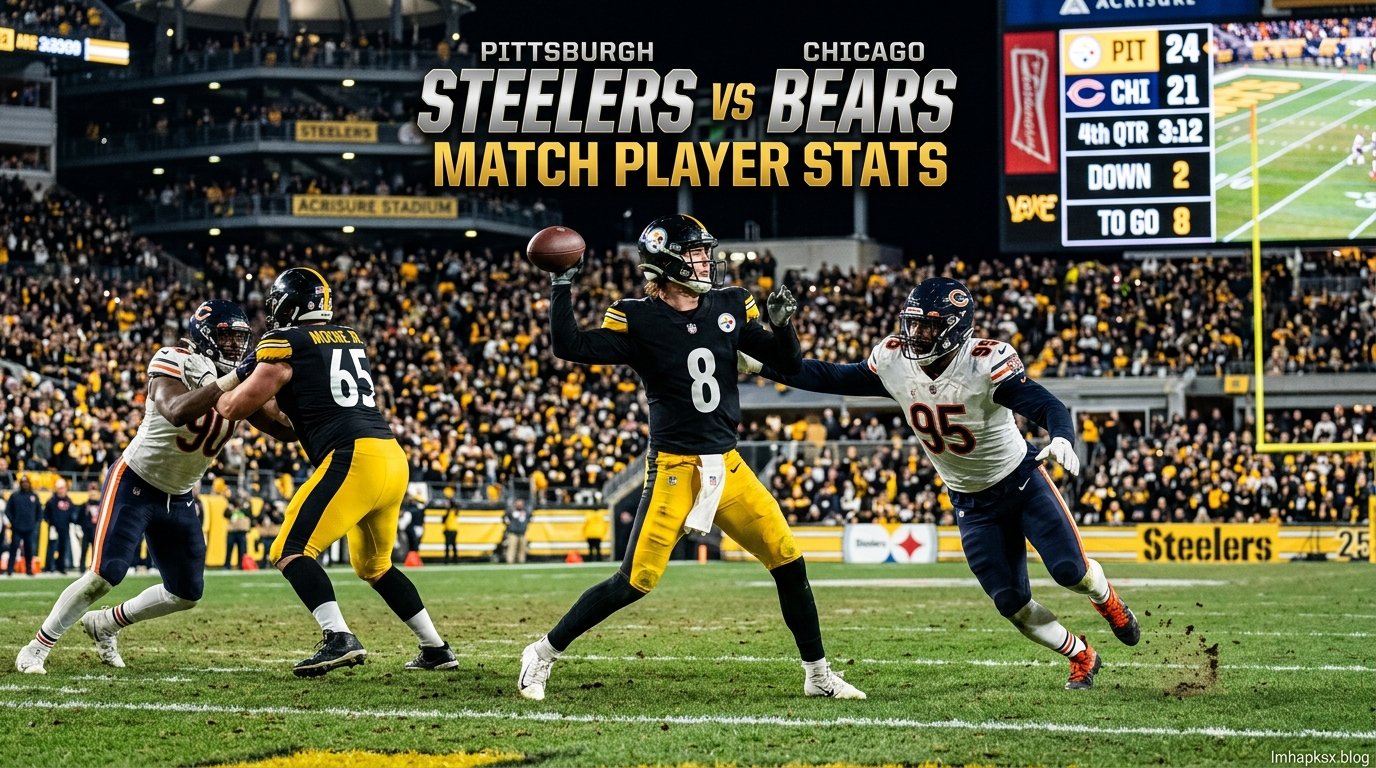
Introduction to Pittsburgh Steelers vs Chicago Bears Rivalry
The pittsburgh steelers vs chicago bears match player stats are two of the most respected franchises in NFL history. Both teams are known for their physical style of football, legendary defensive traditions, and passionate fan bases that have supported them for generations. Whenever these organizations meet on the field, the matchup carries extra excitement because fans expect toughness, emotional intensity, and high-level competition. Their games often reflect old-school football where defense, discipline, and momentum shifts play major roles in determining the final result.
Over the years, the rivalry has produced memorable moments involving elite quarterbacks, dominant linebackers, and dramatic finishes. Although the Steelers and Bears do not face each other every season, their meetings still attract national attention because of the history attached to both franchises. The latest matchup between pittsburgh steelers vs chicago bears match player statscontinued that tradition with an entertaining contest filled with offensive production, defensive pressure, and several important player performances that shaped the outcome.
The game also highlighted how both franchises are entering new eras. pittsburgh steelers vs chicago bears match player stats continues building around young quarterback Caleb Williams, while Pittsburgh is trying to maintain its competitive identity with a balanced offense and aggressive defensive philosophy. Fans from both sides viewed the matchup as an important test for their teams moving forward in the season.
Overview of the Latest Steelers vs Bears Match
The latest meeting between pittsburgh steelers vs chicago bears match player stats ended with a thrilling 31-28 victory for Chicago at Soldier Field. The contest remained competitive from the opening kickoff until the final minutes, with both teams exchanging touchdowns and momentum throughout the afternoon. pittsburgh steelers vs chicago bears match player stats offense performed efficiently in critical situations, while pittsburgh steelers vs chicago bears match player stats relied heavily on its rushing attack and ball-control strategy to keep the game close.
The Bears opened the scoring early with a passing touchdown from Caleb Williams to DJ Moore. Pittsburgh answered quickly with a rushing touchdown and later added another score through a defensive recovery in the end zone. At halftime, the Steelers held a slight advantage after capitalizing on pittsburgh steelers vs chicago bears match player stats mistakes and controlling time of possession with their physical running game.
The second half became more offensive as both quarterbacks increased the tempo. pittsburgh steelers vs chicago bears match player stats adjusted its passing attack and began targeting the middle of Pittsburgh’s defense more aggressively. Caleb Williams delivered several important completions during key drives, while the Bears defense made timely stops that prevented Pittsburgh from fully taking control of the game. By the end of the fourth quarter, Chicago’s efficiency in the red zone proved to be the deciding factor in securing the victory.
First Half Highlights and Key Turning Points
The opening half featured fast-paced offense and several momentum swings that energized the crowd at Soldier Field. pittsburgh steelers vs chicago bears match player stats started strongly with Caleb Williams showing confidence and composure in the pocket. His first touchdown pass to DJ Moore gave the Bears early momentum and demonstrated the strong connection developing between the quarterback and his top receiver.
pittsburgh steelers vs chicago bears match player stats responded by focusing heavily on the ground game. The Steelers offensive line created strong running lanes, allowing their running backs to consistently gain positive yardage. Their ability to sustain long drives helped control possession and slowed Chicago’s offensive rhythm. Pittsburgh eventually tied the game through a rushing touchdown after a methodical drive that wore down the Bears defense.
One of the biggest turning points of the first half came when pittsburgh steelers vs chicago bears match player stats recovered a fumble in the end zone for a defensive touchdown. That play shifted momentum completely and gave the Steelers confidence heading into halftime. pittsburgh steelers vs chicago bears match player stats briefly struggled after the turnover, but Caleb Williams remained calm and led another scoring drive before the break to keep the game within reach.
Caleb Williams and Chicago Bears Offensive Player Stats
Caleb Williams delivered one of the strongest performances of his young NFL career during the matchup against pittsburgh steelers vs chicago bears match player stats. He completed 19 passes for 239 yards and threw three touchdown passes without an interception. His decision-making under pressure impressed analysts and fans because pittsburgh steelers vs chicago bears match player stats’s defense consistently attempted to disrupt him with blitz packages and aggressive pass rush schemes.
Williams showed excellent chemistry with his receiving unit throughout the game. DJ Moore became his primary target and produced two touchdown catches while repeatedly creating separation against pittsburgh steelers vs chicago bears match player stats’s secondary. Moore’s route running and ability to gain yards after the catch helped pittsburgh steelers vs chicago bears match player stats maintain offensive momentum during several important drives in the second half.
Tight end Colston Loveland also played a valuable role in Chicago’s offense. His touchdown reception in the second quarter demonstrated how effectively the Bears used tight ends in red-zone situations. Williams distributed the football efficiently and avoided forcing dangerous throws into coverage. His calm performance in critical moments helped pittsburgh steelers vs chicago bears match player stats convert scoring opportunities and maintain offensive balance throughout the contest.
Pittsburgh Steelers Offensive Performance and Quarterback Analysis
Pittsburgh’s offense entered the game with a clear strategy focused on physical football and ball control. The Steelers relied heavily on their rushing attack while using short and efficient passing plays to maintain possession. Quarterback Mason Rudolph completed 24 of 31 pass attempts and threw one touchdown pass while managing the offense effectively for most of the game.
Although Rudolph posted a strong completion percentage, Pittsburgh’s passing game lacked explosive plays downfield. The Bears defense limited deep passing opportunities and forced the Steelers to rely on long drives rather than quick scoring possessions. Rudolph performed well under pressure at times, but Chicago’s defensive adjustments during the second half reduced Pittsburgh’s offensive rhythm.
The Steelers still generated enough offense to remain competitive until the final moments. Their offensive line protected the quarterback reasonably well and continued opening lanes for the running backs. Pittsburgh’s ability to dominate possession for extended periods kept pressure on Chicago’s defense and allowed the Steelers to stay within striking distance throughout the contest.
Running Game Breakdown for Both Teams
The running game played a major role in shaping the overall flow of the matchup. Pittsburgh finished with nearly 200 rushing yards and consistently controlled the line of scrimmage during long stretches of the game. Jaylen Warren delivered an important performance by attacking the middle of pittsburgh steelers vs chicago bears match player stats’s defense and gaining tough yards after contact. His rushing touchdown highlighted Pittsburgh’s physical offensive identity.
The Steelers offensive line performed aggressively in run blocking situations. Their ability to create space allowed pittsburgh steelers vs chicago bears match player stats to sustain long drives and limit Chicago’s offensive possessions. Pittsburgh also used creative goal-line formations involving wide receiver DK Metcalf, who contributed a rushing touchdown that added another dimension to the offense.
Chicago’s rushing attack was less dominant statistically, but it still played an important supporting role. The Bears used the running game strategically to balance their offense and prevent Pittsburgh from focusing entirely on Caleb Williams. pittsburgh steelers vs chicago bears match player stats’s runners contributed valuable first downs during important moments and helped maintain manageable passing situations for the young quarterback.
Wide Receiver and Tight End Match Player Statistics
The receiving units for both teams produced several important moments throughout the game. Chicago receiver DJ Moore emerged as one of the biggest stars of the contest with two touchdown receptions and multiple explosive plays. His speed, route precision, and ability to make contested catches created constant problems for Pittsburgh’s defensive backs.
Colston Loveland provided additional production for Chicago by contributing a touchdown catch and several important receptions in traffic. The Bears offense frequently attacked the middle of the field, where Loveland’s size and physicality gave Chicago an advantage against linebackers and safeties. His presence forced Pittsburgh’s defense to spread its coverage more carefully.
For Pittsburgh, tight end Pat Freiermuth delivered an important touchdown reception late in the game. He became one of Rudolph’s most reliable targets during critical situations, especially on third downs. Although Pittsburgh’s receiving group lacked the explosive numbers produced by Chicago’s pass catchers, they still contributed enough production to keep the offense competitive throughout all four quarters.
Defensive Standouts, Sacks, and Turnovers
Despite the high scoring nature of the game, defense still played a major role in several key moments. Pittsburgh’s defense produced one of the game’s most important plays when Nick Herbig recovered a fumble in the end zone for a touchdown. That defensive score gave the Steelers momentum and temporarily shifted control of the game in their favor.
The Steelers pass rush applied pressure throughout the afternoon, forcing Caleb Williams to move outside the pocket on multiple occasions. Although Williams handled the pressure effectively, Pittsburgh defenders still created difficult situations that disrupted Chicago’s offensive timing during certain drives. Their aggressive defensive approach reflected the traditional Steelers identity built around physical play and relentless pressure.
Chicago’s defense improved significantly during the second half. The Bears adjusted their coverage schemes and limited Pittsburgh’s ability to generate explosive offensive plays. They forced critical stops during important possessions and capitalized on mistakes at key moments. Their defensive discipline late in the game helped secure the narrow victory and prevented Pittsburgh from completing a comeback.
Complete Team Stats Comparison and Game Analysis
Statistically, the matchup remained extremely balanced from start to finish. Pittsburgh controlled time of possession for more than 33 minutes and finished with a strong rushing total that reflected its physical offensive style. Chicago, however, generated more efficient passing production and converted scoring opportunities more effectively inside the red zone.
Both teams performed well on third downs and consistently extended drives. Pittsburgh converted multiple third-and-short situations through its running game, while Chicago relied on Caleb Williams’ passing accuracy to maintain offensive momentum. The ability of both offenses to sustain drives kept the game competitive throughout all four quarters.
One of the biggest differences came in situational football. Chicago protected the football more effectively during critical moments and finished drives with touchdowns instead of field goals. Pittsburgh produced solid overall numbers but struggled to capitalize fully on certain opportunities. In close NFL games, those small differences often determine the final outcome, and this matchup provided another clear example.
Fan Reactions, Historic Trends, and What the Result Means for Both Teams
Fans and analysts reacted strongly after the game because of the exciting nature of the contest and the impressive performances from several players. Chicago supporters celebrated Caleb Williams’ development and praised his ability to perform calmly against a respected defensive opponent. Many viewed the victory as a sign that the Bears are progressing positively with their young quarterback leading the offense.
Pittsburgh fans focused heavily on missed opportunities and defensive inconsistencies during key moments. Many supporters believed the Steelers controlled important parts of the game through their rushing attack and time of possession but failed to finish strongly in critical situations. Discussions after the game frequently centered on turnovers and defensive breakdowns that allowed Chicago to gain momentum late in the contest.
The matchup also carried historical significance because games between the Steelers and Bears often reflect traditional NFL football built around physicality and toughness. This latest meeting continued that tradition while also highlighting the changing direction of both franchises. Chicago appears to be building confidence around a talented young offense, while Pittsburgh continues searching for consistency as it balances veteran leadership with evolving offensive strategies.
Read More: lmhapksx