Sonic Characters
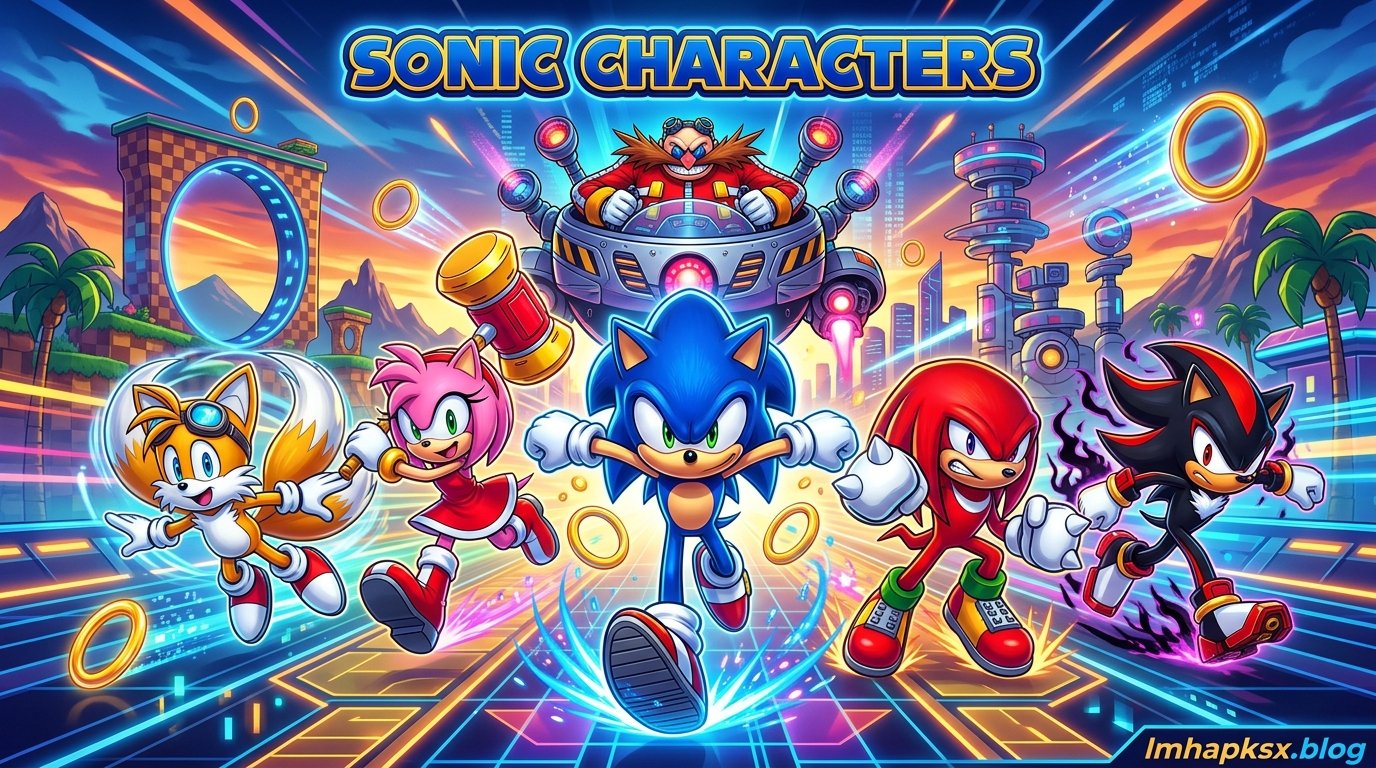
The Sonic characters the Hedgehog franchise is one of the most famous gaming universes ever created. Since the release of the first Sonic game in 1991 by Sega, the series has introduced a huge collection of heroes, villains, rivals, and supporting characters that helped shape modern gaming culture. Sonic characters are known for their colorful personalities, fast-paced adventures, emotional backstories, and unique powers. Over the decades, these characters have appeared not only in video games but also in animated television shows, comic books, movies, and online fan communities.
The popularity of Sonic characters comes from the way each character feels different and memorable. Some characters are brave and energetic, while others are mysterious, intelligent, humorous, or powerful. The franchise successfully created a universe where every character contributes something important to the story. Fans around the world continue to discuss their favorite Sonic heroes and villains because the Sonic characters have grown alongside multiple generations of players.
The History of Sonic Characters
The Sonic characters franchise began during the early 1990s when Sega wanted a mascot that could compete with other famous gaming icons of that era. The company designed Sonic the Hedgehog as a symbol of speed, attitude, and freedom. His bright blue appearance, red shoes, and confident smile immediately attracted attention. The first game became a major success because it offered fast gameplay and exciting level design that felt very different from other platform games available at the time.
As the games became more popular, Sega expanded the universe by introducing new Sonic characters. The developers realized that Sonic characters’s adventures could become more interesting with companions, rivals, and enemies. This led to the creation of Tails, Knuckles, Amy Rose, and many other Sonic characters who added emotional depth and variety to the franchise. Each new character came with unique abilities that changed the gameplay experience and introduced fresh storylines.
During the late 1990s and early 2000s, the franchise evolved from classic side-scrolling games into 3D adventures. Games such as Sonic Adventure and Sonic Adventure 2 allowed characters to receive more detailed personalities and cinematic storytelling. These titles explored themes like friendship, responsibility, sacrifice, revenge, and redemption. Over time, the Sonic universe became much larger and more complex, attracting both younger players and longtime fans.
Sonic the Hedgehog as the Main Hero
Sonic characters the Hedgehog is the center of the entire franchise and remains one of the most recognizable gaming Sonic characters in history. Sonic is famous for his incredible speed, fearless personality, and adventurous spirit. He loves freedom and dislikes anyone who tries to control others or destroy nature. His confidence and humor make him entertaining, while his bravery makes him an inspiring hero.
Sonic’s abilities mainly focus on speed. He can run faster than sound, perform spinning attacks, and react quickly during dangerous situations. His famous Spin Dash move became one of the defining mechanics of the franchise. In many games, Sonic characters also uses the power of the Chaos Emeralds to transform into Super Sonic, a golden version of himself with incredible strength and flying abilities.
Although Sonic characters often appears carefree, he deeply cares about his friends and the safety of the world. He constantly risks his life to stop dangerous threats created by villains like Dr. Eggman. Sonic’s personality also makes him unique compared to other gaming heroes because he rarely follows rules and prefers solving problems his own way. This rebellious but heroic attitude helped make him an international icon.
Sonic’s popularity expanded beyond video games into cartoons, anime, comics, and live-action movies. Modern audiences continue to enjoy his adventures because his character represents energy, courage, and optimism. Even after more than thirty years, Sonic remains the heart of the franchise and the reason millions of fans stay connected to the series.
Tails and the Importance of Friendship
Miles ‘Tails’ Prower is one of the most beloved characters in the Sonic universe. Introduced in Sonic the Hedgehog 2, Tails quickly became Sonic’s closest friend and trusted companion. He is a young fox with two tails that allow him to fly like a helicopter. His nickname, “Tails,” comes from this special feature.
Unlike Sonic, who mainly depends on speed and instinct, Tails uses intelligence and technology. He is a brilliant inventor and mechanic who can repair machines, pilot aircraft, and build advanced gadgets. Tails often helps Sonic solve technical problems and provides support during dangerous missions. His plane, known as the Tornado, became an important part of several Sonic adventures.
Tails also represents emotional growth in the series. Early games showed him as shy and insecure, but later stories revealed his increasing confidence and independence. Many fans appreciate the friendship between Sonic and Tails because it feels genuine and supportive. Sonic encourages Tails to believe in himself, while Tails provides loyalty and intelligence to the team.
The character became extremely popular among younger fans because of his kindness and determination. Tails demonstrates that heroes do not need to rely only on physical strength. His intelligence, creativity, and bravery prove that different skills can be equally important during difficult situations.
Knuckles the Echidna and the Master Emerald
Knuckles the Echidna introduced a new level of power and rivalry into the Sonic universe. He first appeared in Sonic the Hedgehog 3 as an opponent manipulated by Dr. Eggman into believing Sonic was the enemy. Over time, however, Knuckles became one of Sonic’s strongest allies.
Knuckles is physically stronger than most characters in the series. He can glide through the air, climb walls, and destroy obstacles using his powerful fists. His role as the guardian of the Master Emerald gives him a serious sense of duty and responsibility. The Master Emerald is an ancient artifact with enormous power, and protecting it is Knuckles’ main mission.
Unlike Sonic’s carefree nature, Knuckles is more focused and disciplined. He spends much of his time alone on Angel Island guarding the emerald from thieves and enemies. Although he can sometimes be stubborn or easily tricked, his loyalty and courage make him a respected hero within the franchise.
Knuckles became especially popular because he added tension and rivalry to Sonic’s adventures. Fans enjoyed seeing his battles against Sonic, as both characters had very different personalities and fighting styles. Over the years, Knuckles evolved from a rival into a trusted member of Sonic’s team while still maintaining his independent identity.
Shadow the Hedgehog and Dark Storytelling
Shadow the Hedgehog is one of the most complex and popular characters in the franchise. Introduced in Sonic Adventure 2, Shadow immediately attracted attention because of his mysterious personality and emotional story. Created as the “Ultimate Life Form,” Shadow was designed through scientific experiments involving advanced technology and alien research.
Shadow possesses abilities similar to Sonic’s speed, but he also uses powerful Chaos abilities that allow teleportation, energy attacks, and time manipulation. His darker design, serious attitude, and tragic backstory made him stand out among other Sonic characters. Unlike Sonic, Shadow often struggles with painful memories and questions about his purpose.
One of the main reasons fans connect with Shadow is his emotional depth. His story involves themes of loss, revenge, identity, and redemption. Throughout the games, Shadow slowly changes from a revenge-driven antihero into someone willing to protect humanity despite his painful past. This character development added a more mature tone to the Sonic universe.
Shadow’s popularity continues to grow because he appeals to older fans who enjoy darker storytelling. He frequently appears in games, animated content, and movies, proving that he became one of Sega’s most valuable characters outside of Sonic himself.
Dr. Eggman and the Villains of the Franchise
Doctor Eggman, also known as Dr. Robotnik, is the main villain of the Sonic franchise. He is a genius scientist who dreams of controlling the world through advanced machines and robotic armies. Eggman constantly creates dangerous inventions and massive robots to defeat Sonic and conquer different regions.
Eggman’s intelligence makes him a dangerous opponent despite his comedic personality. He often uses technology to transform natural environments into mechanical empires filled with factories and machines. Many Sonic stories revolve around Eggman searching for ancient artifacts or powerful energy sources to strengthen his inventions.
Another important aspect of Eggman’s character is his persistence. Even after repeated defeats, he never gives up on his plans. His determination keeps the conflict between heroes and villains active throughout the franchise. Fans enjoy Eggman because he combines humor, intelligence, and danger in a memorable way.
The Sonic universe also includes many additional villains beyond Eggman. Characters such as Metal Sonic, Chaos, Infinite, and Black Doom introduced different forms of danger into the series. Some villains rely on technology, while others use supernatural powers or emotional manipulation. These enemies helped expand the franchise lore and create more dramatic storylines.
Female Sonic Characters and Their Evolution
Female characters became increasingly important as the Sonic franchise continued to grow. Amy Rose was one of the earliest major female characters and remains one of the most recognizable today. Amy is energetic, determined, and deeply loyal to Sonic and her friends. Although she was initially portrayed mainly as Sonic’s admirer, later games developed her into a capable fighter and leader.
Amy’s signature weapon is the Piko Piko Hammer, which she uses during battles and adventures. Her cheerful personality often brings humor and positivity to difficult situations. Over time, Amy became more independent and confident, showing that she could contribute to missions without depending entirely on Sonic.
Other female characters also added variety to the Sonic universe. Rouge the Bat introduced a more mysterious and mature personality. Rouge works as a treasure hunter and secret agent who often operates independently while pursuing valuable gems and information. Her intelligence and confidence made her one of the franchise’s most unique characters.
Blaze the Cat brought an entirely different atmosphere into the series. Coming from another dimension, Blaze is calm, disciplined, and responsible. Her fire abilities and royal background created fresh story possibilities involving alternate worlds and parallel universes. These female characters helped make the franchise more balanced and expanded its emotional range.
Lesser-Known Sonic Characters and Expanded Lore
One reason the Sonic franchise remains interesting is its massive collection of supporting characters. While Sonic, Tails, and Knuckles are the most famous names, many lesser-known characters have loyal fan followings. These characters help expand the universe and introduce new gameplay styles and story themes.
Silver the Hedgehog became popular because of his futuristic storyline and telekinetic powers. Coming from a ruined future, Silver travels through time to prevent disasters and save his world. His serious personality and unique abilities made him stand out from the main cast.
The Chaotix team also added humor and detective themes to the franchise. Characters like Vector the Crocodile, Espio the Chameleon, and Charmy Bee operate as detectives solving mysteries while helping Sonic during larger threats. Their interactions often provide comedic moments that balance the more serious parts of the stories.
Other characters such as Jet the Hawk, Cream the Rabbit, Big the Cat, and Omega contributed to the diversity of the Sonic universe. Some appear mainly in racing games or spin-offs, while others play important roles in major adventures. The large roster allows the franchise to experiment with different genres, personalities, and storytelling approaches.
Sonic Characters in Movies, Television, and Comics
The popularity of Sonic characters expanded far beyond video games. Animated television series introduced the characters to audiences who may never have played the games. Different shows portrayed Sonic and his friends in unique ways, ranging from lighthearted comedy to darker action-focused storytelling.
Comic books also played a major role in expanding Sonic lore. Sonic comics explored deeper storylines, alternate timelines, and character relationships that were not fully shown in the games. Many fans consider the comics an important part of the franchise because they added emotional depth and world-building.
The live-action Sonic movies introduced the franchise to a completely new generation of viewers. These films successfully adapted Sonic, Tails, Knuckles, and other characters into a cinematic format while keeping their personalities recognizable. The success of the movies increased global interest in Sonic and helped revive popularity for classic games and characters.
Streaming content and short animated projects continue to keep the franchise active between major game releases. Sega understands that Sonic characters are valuable entertainment icons capable of succeeding across multiple forms of media. This cross-media success helped Sonic remain relevant in modern pop culture.
Why Sonic Characters Remain Popular Worldwide
Sonic characters remain popular because they combine memorable designs, strong personalities, and emotional storytelling. Each character represents different traits that fans can relate to. Sonic symbolizes freedom and confidence, Tails represents intelligence and loyalty, Knuckles reflects responsibility, and Shadow explores emotional conflict.
Another reason for the franchise’s success is its ability to evolve while maintaining its identity. New games introduce modern gameplay and updated graphics, but the characters still feel familiar to longtime fans. This balance between nostalgia and innovation allows Sonic to attract both older audiences and younger players discovering the series for the first time.
The global fan community also keeps the franchise alive through fan art, discussions, theories, animations, and online content. Sonic fans remain extremely passionate about the characters and continue debating storylines, rivalries, and future game possibilities. This strong community support helped the franchise survive difficult periods and remain one of gaming’s most recognized brands.
The Sonic universe continues expanding with new games, movies, and characters. After more than three decades, the franchise still captures the excitement, speed, and adventure that made it famous in the beginning. Sonic characters are more than simple gaming mascots because they represent friendship, courage, rivalry, growth, and imagination. Their lasting popularity proves that the world of Sonic still has a bright future ahead.
Read More: lmhapksx