What Is Gimkit and How Does It Work?
Gimkit is a web-based educational platform designed to make learning more engaging through game-based quizzes. It allows teachers to create question sets called “kits,” which students answer in real time or at their own pace. Each correct answer rewards students with virtual currency, which they can use inside the game to purchase upgrades, power-ups, and strategic advantages. This system transforms traditional quiz-based learning into an interactive experience that feels more like a video game than a classroom test.
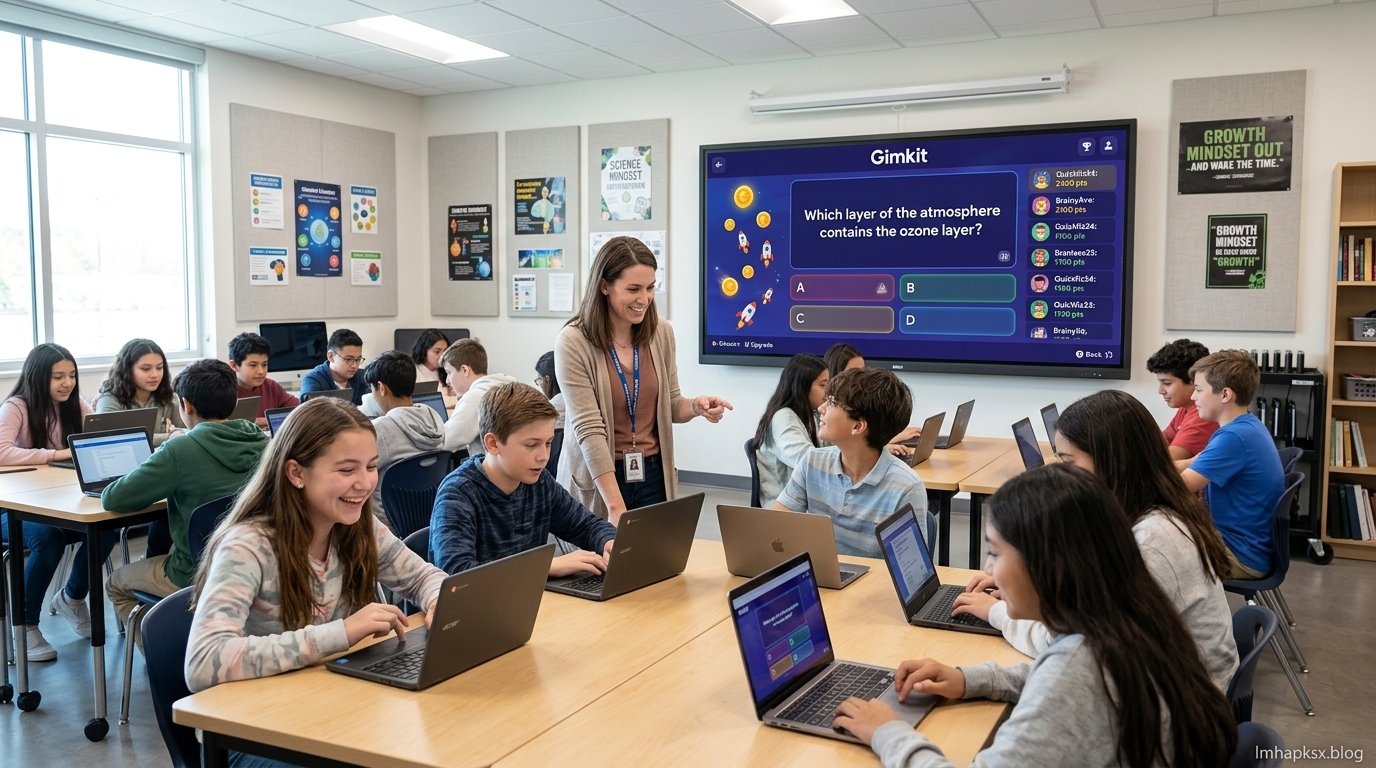
The platform is widely used in schools because it works on multiple devices, including laptops, tablets, and smartphones. Students join a session using a simple game code provided by the teacher. Once inside, they compete individually or in teams depending on the selected game mode. The structure of Gimkit encourages active participation, where every answer directly impacts progress in the game.
Unlike traditional quiz tools, Gimkit emphasizes strategy as much as knowledge. Students must decide how to spend earned currency, whether to upgrade earnings, protect progress, or boost performance. This combination of learning and decision-making is one of the main reasons it has become popular in modern classrooms.
History and Development of Gimkit
Gimkit was created in 2017 by Josh Feinsilber, a high school student who wanted to make studying more engaging and less repetitive. He observed that many classroom review tools were too static and failed to keep students interested. His idea was to combine quiz-based learning with video game mechanics to create a more immersive experience.
After its initial release, Gimkit quickly gained attention among educators because it solved a common classroom problem: low student engagement during revision sessions. Teachers noticed that students who usually avoided participation became more active when learning was turned into a game. This early success helped the platform grow rapidly across schools in the United States and other countries.
Over time, Gimkit evolved from a simple quiz tool into a full educational gaming ecosystem. New features such as creative modes, advanced game mechanics, and customizable learning environments were added. Continuous updates and teacher feedback have played a key role in shaping the platform into what it is today, making it a widely recognized tool in the educational technology space.
Key Features of Gimkit Learning Platform
One of the most important features of Gimkit is its question-based system, known as “kits.” Teachers can create kits manually, import questions from other platforms, or use shared resources from the Gimkit community. These kits can include multiple-choice or short-answer questions across any subject area, making the platform flexible for different learning needs.
Another major feature is the in-game reward system. Students earn virtual money for correct answers and lose progress for incorrect ones. This creates a balance between risk and reward, encouraging students to think carefully before answering. The currency can be used for upgrades that improve performance, which adds a strategic layer to the learning process.
Gimkit also provides detailed teacher dashboards that track student performance in real time. Educators can see which questions students struggle with, how long they spend on each activity, and overall class performance. This data-driven approach helps teachers adjust their instruction and focus on areas where students need improvement.
Popular Gimkit Game Modes Explained
Gimkit offers multiple game modes, each designed to create a different learning experience. Classic modes focus on individual competition, where students answer questions and earn currency to improve their standing. These modes are often used for quick revision sessions and individual practice activities.
Team-based modes encourage collaboration among students. In these formats, learners work together to achieve shared goals, which helps improve communication skills and group problem-solving abilities. Some modes also introduce unique mechanics such as survival challenges, objective-based missions, or time-limited goals, making the experience more dynamic.
More advanced game modes include creative and themed experiences that introduce storytelling elements, strategy layers, and interactive environments. These modes are designed to keep students engaged for longer periods while still reinforcing educational content. Each mode serves a different classroom purpose, giving teachers flexibility in how they structure lessons.
How Teachers Use Gimkit in Classrooms
Teachers primarily use Gimkit as a revision and reinforcement tool. After introducing a topic, educators create or select a kit to help students practice and review what they have learned. This approach allows students to apply knowledge immediately, which improves retention and understanding.
Many teachers also use Gimkit for formative assessment. Instead of traditional quizzes, they run live games where students answer questions in real time. The results help teachers identify learning gaps and adjust their teaching strategies accordingly. This makes Gimkit not just a learning tool, but also a diagnostic instrument for classroom performance.
In some classrooms, teachers allow students to contribute questions to kits. This method encourages deeper engagement because students must understand the material well enough to create meaningful questions. It also promotes collaboration and peer learning, making the classroom environment more interactive.
Benefits of Using Gimkit for Students
Gimkit provides several educational benefits, starting with increased engagement. Students are more likely to participate when learning is presented in a game format. The reward system and interactive gameplay help reduce boredom and make studying more enjoyable.
Another important benefit is improved knowledge retention. Repeated exposure to questions in a gamified environment helps reinforce memory. Students often learn without realizing they are studying because the focus is on gameplay rather than traditional instruction.
Gimkit also supports different learning styles. Visual, auditory, and kinesthetic learners can all benefit from its interactive design. The flexibility of game modes allows students to learn at their own pace while still participating in group activities, making it suitable for diverse classrooms.
Gimkit Creative Mode and Custom Learning Tools
Gimkit Creative is one of the platform’s most innovative features. It allows users to design their own interactive learning environments, including maps, challenges, and game worlds. This transforms learning from simple quizzes into immersive educational experiences.
Teachers can use Creative mode to build customized lessons that match their curriculum. For example, they can design virtual escape rooms, exploration-based learning tasks, or subject-specific adventure games. This helps students engage with content in a more hands-on and imaginative way.
Students also benefit from Creative mode because it encourages creativity and problem-solving. By designing their own educational games, they gain a deeper understanding of subject matter while developing technical and design skills. This feature makes Gimkit more than just a quiz platform—it becomes a creative learning ecosystem.
Challenges and Limitations of Gimkit
Despite its strengths, Gimkit also has some limitations. One common concern is that students may focus too much on gameplay rather than learning content. In highly competitive environments, the excitement of winning can sometimes overshadow the educational purpose.
Another challenge is maintaining long-term engagement. While Gimkit is highly engaging initially, repeated use of the same game formats may reduce excitement over time. Teachers need to vary modes and question styles to keep students interested and motivated.
Technical limitations and classroom management issues can also occur, especially in large groups or online learning environments. Without proper supervision, some students may become distracted or misuse the platform. Effective teacher guidance is essential for maintaining balance between fun and learning.
Future of Gimkit in Digital Education
The future of Gimkit is closely linked to the growth of digital and interactive learning technologies. As education continues to move toward hybrid and technology-driven models, platforms like Gimkit are expected to play an even bigger role in classrooms.
Future updates are likely to focus on deeper customization, improved creative tools, and more immersive learning environments. The demand for personalized education experiences is growing, and Gimkit is positioned to adapt to these changes by expanding its interactive features.
Overall, Gimkit represents a shift in how students learn and engage with academic content. By combining education with gaming elements, it has created a model that continues to influence modern teaching methods and classroom innovation.
Read More: lmhapksx